Lancelot learns what a normal customer on each plan costs you in AI, and drafts the fix for anyone far past it.

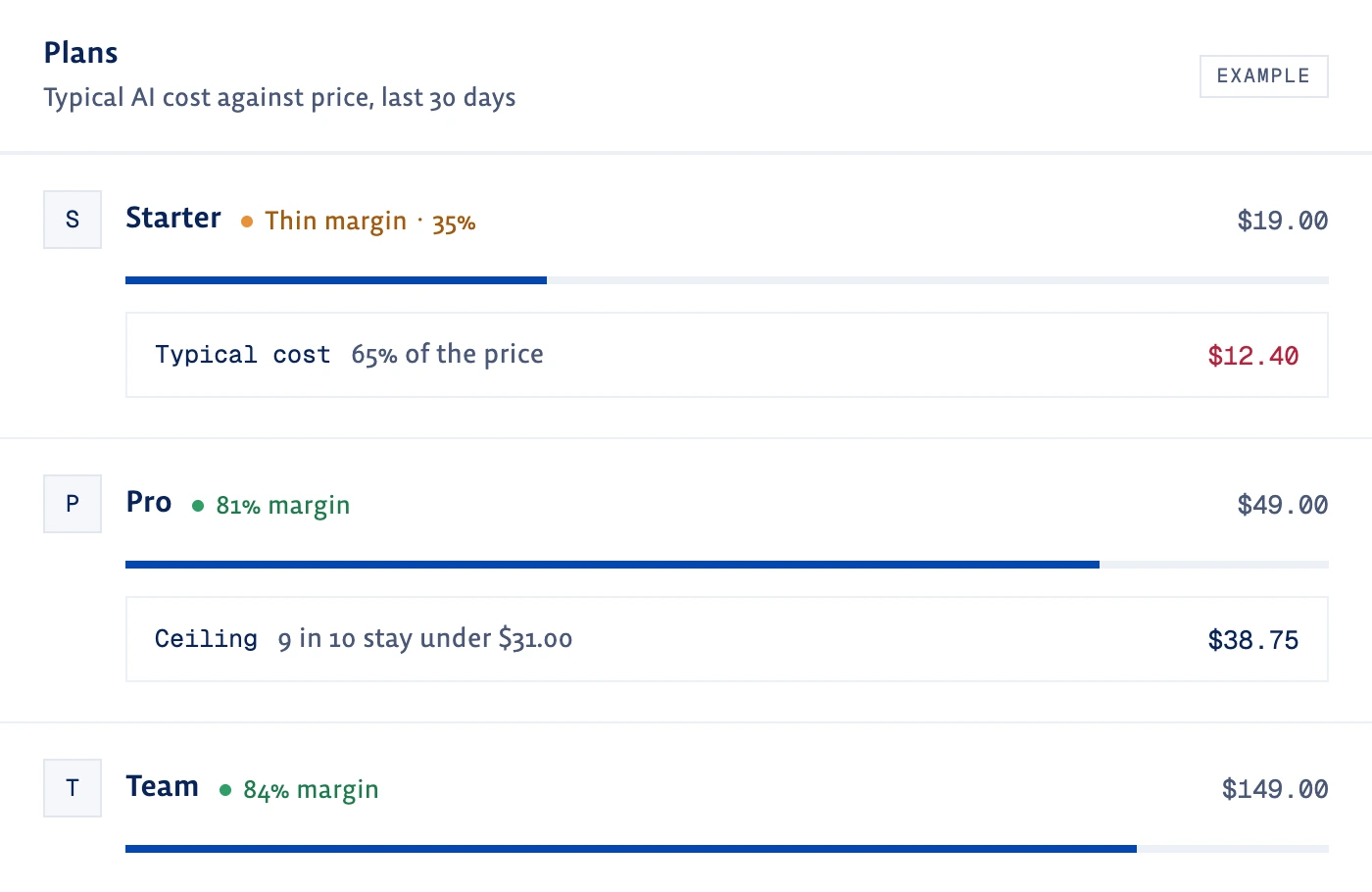
days of usage set each plan’s ceiling, refreshed every hour.
customers with usage, and the ceiling comes from your data alone.
of the price for a typical customer marks a plan as thin.
looser ceiling each time you undo a cap.
the typical customer’s AI cost, for the heaviest Pro customer in this example.
Each ceiling shows what it’s based on, so you know how far to trust it.
Lancelot reads your plans and prices from Stripe or RevenueCat.
Lancelot drafts upgrade offers with your Payment Links, and you send them.
Caps lift by themselves next month, and you can undo one anytime.
Customers with at least a week of usage, over the last 30 days.
The larger of 25% above what 9 in 10 customers stay under, or 3 times the typical customer. One heavy user can’t drag it up.
Never above the plan’s price. A customer past the price is its own finding.
With 8 or more customers, the ceiling comes from them alone. With fewer, it starts at half the plan’s price and leans on real usage as customers arrive.
Get a ceiling once 8 customers have usage.
Keyed to the Stripe product, so a new name keeps everything Lancelot learned, approvals and undos included.
The plan’s ceiling loosens by 25%. The same happens when a capped customer cancels within 30 days.
The ceiling tightens by 3%.
Between 0.8 and 3 times the starting ceiling, so one bad week can’t swing it far.
From the third day of each month, Lancelot projects every customer’s AI cost to month end.
If you’ve added a Stripe Payment Link for a bigger plan that covers their pace, Lancelot drafts a message with your link. You send it.
The same, with a Payment Link for extra usage this month.
Otherwise, a daily AI budget at the ceiling’s pace for the rest of the month. They keep working, and the cap lifts next month.
On Founder, you approve each cap with one click. Caps need the SDK with enableFlags on.
Lancelot never charges anyone or emails your customers.
A typical customer costs 60% or more of the price, or 1 in 5 customers costs more than they pay. It needs at least 3 customers.
Raise the price, add a usage limit, or move the plan to a cheaper model. Capping heavy users won’t rescue a thin plan’s SaaS gross margin, and sometimes the answer is usage-based pricing.
Lancelot names the kind of fix. It never changes a plan or sets a price.
Profitability by plan on the Insights page: typical cost, what 9 in 10 stay under, and the margin left on each pricing tier. Ceilings work on every plan.
The most a normal customer on that plan costs you in AI each month. Lancelot works it out from your own customers’ last 30 days of usage: the larger of 25% above what 9 in 10 customers stay under, and 3 times the typical customer. It never goes above the plan’s price.
No. Lancelot sets each ceiling from your data and adjusts it from what you approve and undo. You decide how much it may do on its own in the Autonomy settings, and you can undo any cap.
Lancelot flags anyone on pace to pass their plan’s ceiling this month. If you’ve added a Payment Link for a bigger plan that covers their usage, it drafts an upgrade offer. Otherwise it proposes holding them to the ceiling’s pace until month end.
It does the same job without a number you have to guess. Lancelot works out what normal use costs on each plan from your own data and flags customers far past it. You choose whether they get an upgrade offer or a cap for the rest of the month.
No. Upgrade and top-up offers are drafts with your own Stripe Payment Links, and you send them. Lancelot reads Stripe with a read-only key, so it can’t charge, refund or change a subscription.
A paid plan whose typical customer already costs 60% or more of its price in AI, or where 1 in 5 customers costs more than they pay. Capping heavy users won’t fix it, so Lancelot suggests raising the price, adding a usage limit or moving to a cheaper model.
It depends on how far your heaviest customers sit from your typical one. Lancelot’s Plans table shows that gap for every plan. A small gap means a flat subscription works. A wide gap means the flat price is subsidizing power users, which is the case for usage-based pricing, credits or a higher tier.
Lancelot starts at half the plan’s price and leans on real usage as customers arrive. With 8 customers it uses your data alone, and the Plans table labels how each ceiling was worked out.
No. Lancelot keys each plan to its Stripe product, so a new name in Stripe keeps the plan’s history, its ceiling and the adjustments from caps you approved or undid.
Every plan gets ceilings, the findings they raise, caps you approve and upgrade offers. The Plans table and caps that Lancelot applies on its own are on Growth and higher.