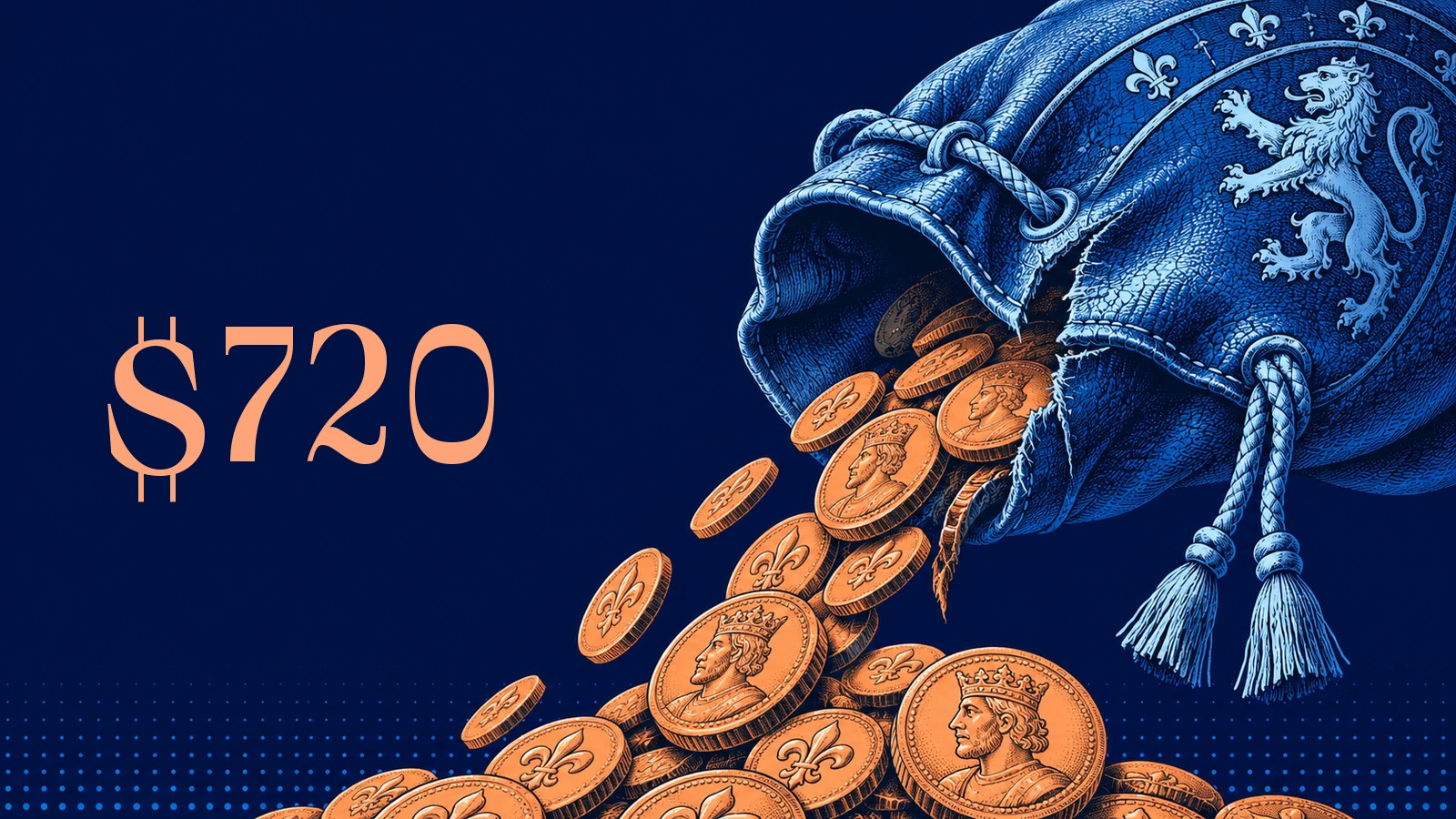



Most AI companies are not profitable yet. Anthropic's IPO filing implies an 85% gross margin on running its models in the first half of 2026, yet the company booked an $80.7 billion net loss over the same six months. App companies that resell model access run thinner margins, and some run below zero.
Prices checked on November 27, 2026, from Anthropic's pricing page.
Gross margin is the cleanest number to compare across companies: revenue minus the cost of serving it, divided by revenue. It leaves out the cost of training new models, which Anthropic keeps outside cost of revenue. Our guide to AI unit economics covers the full cost stack behind it.
How profitable OpenAI and Anthropic are, by the reported numbers
Anthropic made its numbers public on October 26, 2026, when it filed its S-1. According to CNBC, the filing shows $16.29 billion of revenue and $2.38 billion of cost of revenue for the first half of 2026, an implied 85% gross margin. The same calculation for the first half of 2025 gives about 12%. The $80.7 billion net loss includes about $72 billion of accounting charges tied to the rising value of Anthropic's convertible notes.
The 85% excludes the cost of training new models, Semafor noted on October 28, 2026. So the figure describes what it costs Anthropic to serve today's models. The spend on the next generation sits further down the income statement, inside the loss.
OpenAI has not published a prospectus, so its figures come from reporting on documents shared with investors. The Information reported that OpenAI's gross margin was 33% in 2025 and 39% in the first quarter of 2026, as summarized by The Decoder on June 20, 2026. On the whole business, the Financial Times reported that OpenAI took in about $13 billion in 2025 and spent about $34 billion, according to The Next Web's account of June 16, 2026. OpenAI declined to comment on those figures.
| Company | Period | Reported figure | Reported by |
|---|---|---|---|
| Anthropic | H1 2026 | 85% implied gross margin on $16.29B revenue | CNBC, Oct 26, 2026 (from the S-1) |
| Anthropic | H1 2025 | About 12% implied gross margin | CNBC, Oct 26, 2026 (from the S-1) |
| Anthropic | H1 2026 | $80.7B net loss, about $72B of it non-cash charges on convertible notes | CNBC, Oct 26, 2026 (from the S-1) |
| OpenAI | Full year 2025 | 33% gross margin | The Information, via The Decoder, Jun 20, 2026 |
| OpenAI | Q1 2026 | 39% gross margin | The Information, via The Decoder, Jun 20, 2026 |
| OpenAI | October 2025 | 70% "compute margin," paying users only | The Information, via Bloomberg, Dec 21, 2025 |
| OpenAI | Full year 2025 | About $13B revenue, about $39B net loss including restructuring charges | Financial Times, via The Next Web, Jun 16, 2026 |
Source: reporting linked in this section and the Bloomberg report below. The two companies define cost of revenue differently, so the trend inside each company tells you more than the gap between them.
The 70% figure is a narrower internal metric. Bloomberg reported, citing The Information, that it counts only the cost of running models for paying users, up from 52% at the end of 2024. Free users fall outside it. OpenAI CFO Sarah Friar wrote on January 18, 2026 that ads and commerce support ChatGPT's free tier. Those free users add inference cost with no subscription revenue against it.
How AI app companies' gross margins compare with the labs
App companies buy tokens at the labs' prices and resell them inside a subscription, so their margins sit lower. In August 2025, a person close to Windsurf told TechCrunch that its gross margins were "very negative." The same report said Cursor raised prices for its most active users to cover the cost of Anthropic's newest model. Cursor's pricing and power users covers how that played out.
Replit sits at the other end. CEO Amjad Masad told TechCrunch in October 2025 that Replit is gross-margin positive and that its enterprise deals carry 80% to 90% margins. TechCrunch called that claim hard to verify.
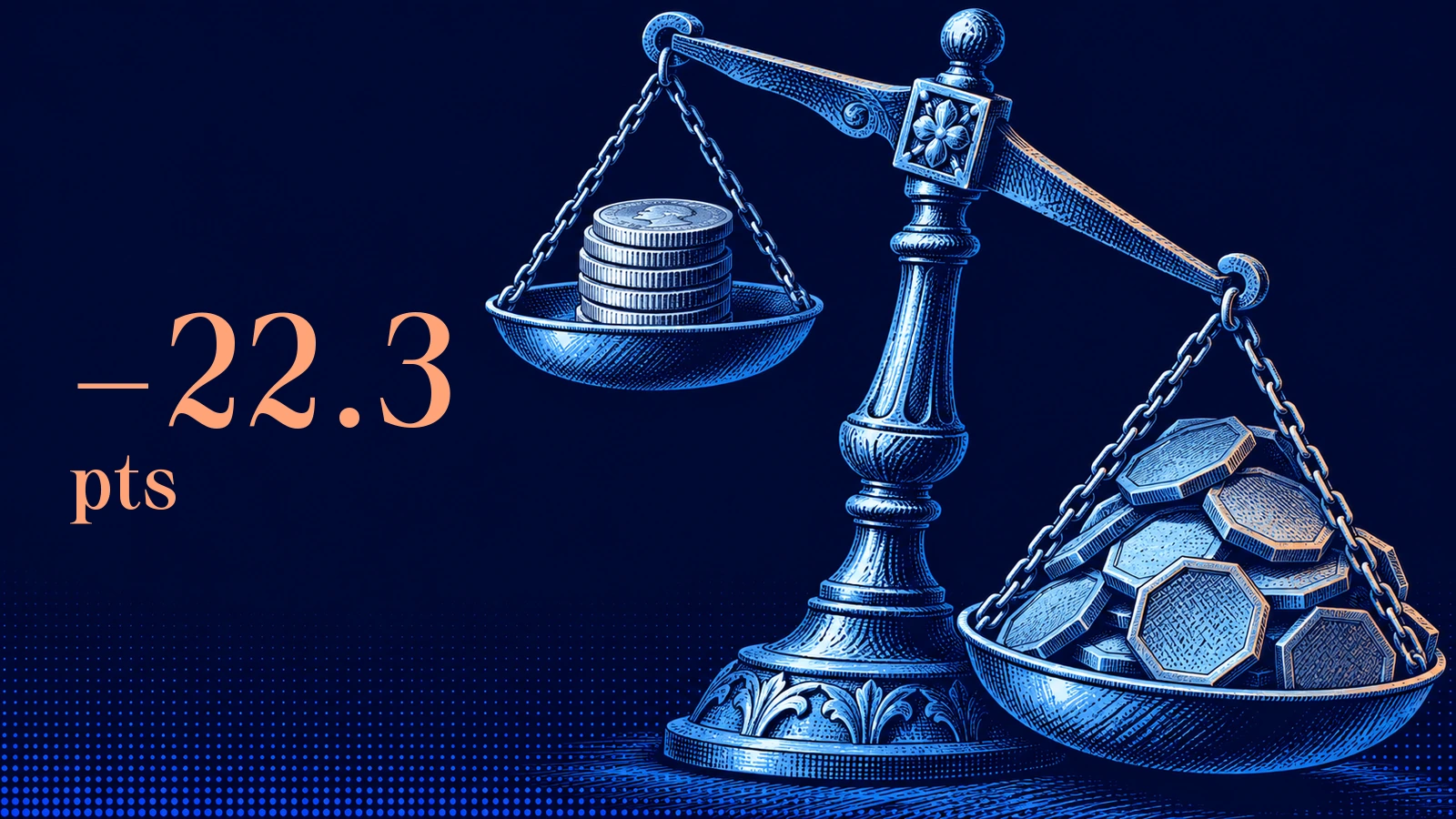
Investor surveys show the spread. Bessemer's State of AI 2025 (August 13, 2025) put its fastest-scaling AI startups at about 25% gross margin on average, often negative, and its fast-growing, capital-efficient group at about 60%. ICONIQ's July 2026 survey of about 300 executives averaged 45% for AI products in 2025 and projected 53% for 2026, with infrastructure products projected to have the highest margins by 2027.
How AI gross margins compare with SaaS gross margin benchmarks
Traditional SaaS still sets the bar. KeyBanc Capital Markets' 17th annual software benchmark, formerly its SaaS Survey, released on November 13, 2026, found a 78% median gross margin in 2025 for software companies spending less than 2% of revenue on AI. Companies spending more than 5% of revenue on AI had a median of 66%.
| Group | Gross margin | Year | Source |
|---|---|---|---|
| Software companies spending under 2% of revenue on AI | 78% (median) | 2025 | KeyBanc |
| Software companies spending over 5% of revenue on AI | 66% (median) | 2025 | KeyBanc |
| Fast-growing, capital-efficient AI startups | About 60% | 2025 | Bessemer |
| AI products, survey average | 45% | 2025 | ICONIQ |
| Fastest-scaling AI startups | About 25%, often negative | 2025 | Bessemer |
Source: KeyBanc Capital Markets (November 13, 2026), Bessemer Venture Partners (August 13, 2025), ICONIQ (July 2026).
The 12 points between those two KeyBanc groups add up fast. On $10 million of revenue, 12 points is $1.2 million a year of gross profit. SaaS COGS when you sell AI breaks down which costs belong in that line.
Why AI gross margins run lower than software margins
Inference is a variable cost. A SaaS company pays about the same to host a customer who logs in twice a month as one who logs in every hour. An AI product pays for every token, so cost rises with each request a customer sends.
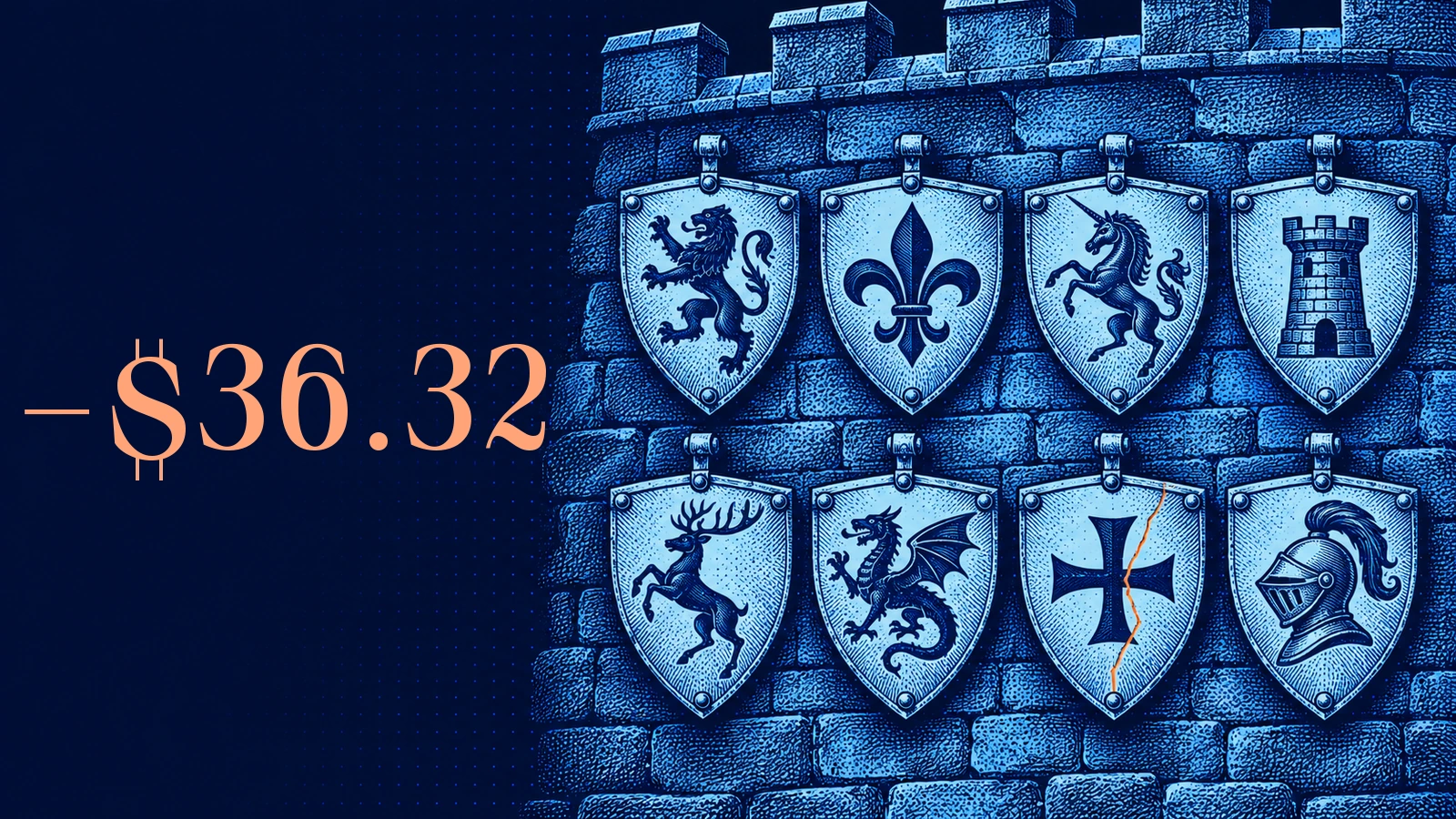
Power users cost many times what they pay. On a flat $49 plan, a customer who sends 18 million input tokens a month to Claude Sonnet 5.5 costs you $36 in input alone, at $2 per million tokens. Add their output tokens and that one account can go underwater while the plan average looks fine.
Falling prices go to customers. Anthropic's pricing page lists the retired Claude Opus 4.1 at $15 per million input tokens and $75 per million output, and Claude Opus 5.5 at $4 and $20. Your competitors get the same price cut, and the ones who pass it on pull your price down with your cost. Newer models can also use more tokens per task: Anthropic says the tokenizer in Claude 4.7 and later produces about 30% more tokens for the same text.
Free tiers carry cost with no revenue. Every free user's requests land in cost of revenue. If 3% of free users convert, the paying 3% fund the inference for the other 97%.
What profitable AI products do differently
Three habits show up in the reporting on companies with healthier margins, and a fourth follows from the arithmetic.
- They charge for usage above a base price. Replit's enterprise customers pay $100 per seat plus usage-based pricing on top, according to the October 2025 TechCrunch interview. ICONIQ found consumption-based pricing rose from 35% to 42% of companies in six months.
- They sell to businesses. Bloomberg's December 2025 report said OpenAI sees better margins on business sales, and its 70% compute margin covers paying users only.
- They route work to cheaper models. ICONIQ reports that companies manage inference costs through routing. On Anthropic's price list, Claude Haiku 5.5 costs $0.10 per million input tokens for prompts up to 100,000 tokens, 20 times less than Sonnet 5.5.
- They watch margin per customer. A plan with a healthy average can still carry customers who cost more than they pay. You only see them when you split cost by customer.
How to measure your own AI gross margin
AI gross margin = (revenue − AI cost of revenue) ÷ revenue

AI cost of revenue = model API spend
                   + hosting for AI features
+ other per-request services- Start from what customers paid: invoices after discounts, refunds and failed payments. List price overstates revenue.
- Tag every model call with the customer and the feature, so each cost lands on the account that caused it.
- Price tokens at what your provider charges, including cache reads and batch discounts, and check the total against the provider's invoice.
- Compute the margin for each customer before you compute the average.
Example. A SaaS product sells a $49 plan and runs on Claude Sonnet 5.5 at $2 per million input tokens and $10 per million output tokens. Three customers on the plan used AI very differently last month.
| Customer | Paid | Input tokens | Output tokens | AI cost | Gross margin |
|---|---|---|---|---|---|
| Northwind | $49 | 2.1M | 0.2M | $6.20 | 87% |
| Birchline | $49 | 6.5M | 0.85M | $21.50 | 56% |
| Coppervale | $49 | 18M | 2.74M | $63.40 | −29% |
| All three | $147 | 26.6M | 3.79M | $91.10 | 38% |
Example data. Coppervale's cost: 18M × $2 + 2.74M × $10 = $63.40.
The blended 38% looks like a thin but working business. Split by customer, Coppervale pays $49 and costs $63.40, and that one account drags the blend from 72% for the other two down to 38%. You would raise Coppervale's price or cap its usage long before you touched the plan.
Once you trust the number, you can show it to buyers and investors. Lancelot's Verified margin badge publishes last month's AI gross margin, recalculated from paid invoices and tracked AI cost, and shows percentages only.
Questions about AI company profitability
Is AI profitable?
Mostly not yet, at the company level. The large labs report strong margins on serving models but large net losses once training and other costs come in. AI app companies range from negative gross margins to about 60%, and SaaS companies with little AI spend sit near 78%.
Is OpenAI profitable?
No. The Financial Times reported in June 2026 that OpenAI lost about $39 billion in 2025 on about $13 billion of revenue, including restructuring charges. The Information reported a 33% gross margin for 2025, rising to 39% in the first quarter of 2026.
Is Anthropic profitable?
No, though its gross margin is high. Anthropic's S-1 shows an $80.7 billion net loss for the first half of 2026, mostly non-cash charges on convertible notes, and an implied 85% gross margin on $16.29 billion of revenue, according to CNBC.
What is a good gross margin for an AI company?
Around 60% puts you with the stronger AI startups. Bessemer's 2025 report put fast-growing, capital-efficient AI startups at about 60%, and ICONIQ's July 2026 survey averaged 45% for AI products in 2025. SaaS companies with little AI spend had a 78% median.
Why do AI startups have lower gross margins than SaaS companies?
AI startups pay for every request. Each model call costs tokens, so heavy users cost more than light users on the same plan, and free users add cost with no revenue against it. Hosting costs for traditional SaaS barely move with usage.
How do you calculate AI gross margin?
Subtract AI cost of revenue from revenue, then divide by revenue. Use what customers paid after discounts and refunds, and count model API spend, hosting and other per-request services. Calculate it per customer first, because one heavy user can hide inside a healthy average.
Gross margin is one number in a longer chain that decides whether an AI product makes money. For the numbers around it, read our guide to AI unit economics.